
In June 2021, a suspected cobweb disease was found in a Ganoderma sinense culture base in Nanning, Guangxi, China. Based on tissue isolation method, multi-gene phylogenetic analysis (ITS, RPB2, TEF1), morphological characters and Koch’s postulates, the pathogen was identified as Cladobotryum protrusum. The best medium for hyphal growth was PDA, and the optimal carbon source and nitrogen source were respectively soluble starch and yeast extract powder; The optimum growth temperature and pH were 25 ℃ and 6, respectively. Darkness is benefical to hyphal growth. This is the first report of C. protrusum causing cobweb on cultivated G. sinense.

Cantharellus enelensis is a popular edible mushroom in eastern North America. Burnt Hill (BH), a small hill surrounded by water on three sides in the heart of Gros Morne National Park of Canada, has been consistently producing fruiting bodies of C. enelensis since at least the 1960s. In contrast, the surrounding areas are not known to produce any fruiting body of this species. Understanding how such an isolated population persists has significant conservation and economic importance. In this study, we obtained and analyzed the genotypes of 109 fruiting bodies from BH, among which, 81 were collected from six patches separated by more than 100 m from each other and the remaining 28 were randomly collected five days later throughout the hill. Genotyping based on microsatellite markers revealed three, five and two alleles at the three loci respectively, with each local patch dominated by one to two alleles at each locus. The three markers revealed 29 multilocus genotypes (MLGs) among the 109 fruiting bodies. The genotype frequencies at each local patch population and in the total sample were overall consistent with Hardy-Weinberg equilibrium. Among the six local patches, while the total samples showed statistically significant genetic differentiation, no difference was observed among the clone-corrected samples. Comparisons between samples from the two time points separated by five days revealed minor differences in allele and genotype frequencies. In addition, we compared the BH population with those at two other sites in Newfoundland (~200 km and ~600 km away) and one site in Hamilton, Ontario (~2 000 km away) to identify potentially unique alleles and genotypes at BH. Together, our analyses demonstrated that mutation, sexual reproduction, gene flow, selection, and genetic drift have all contributed to the genetic diversity within this local chantarelle population.

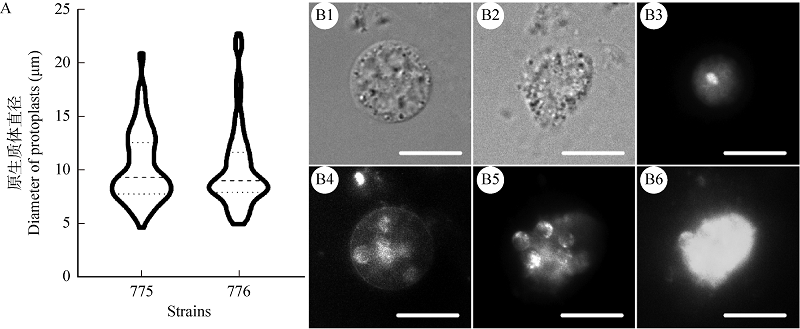
Wolfiporia hoelen is an edible and medicinal fungus that has been cultivated in China for a long time and is cultivated currently on a large scale. However strain degeneration and decrease in yield caused by long-term asexual propagation affected the development of the industry. In order to solve the difficult breeding problem, distinguishing methods of homokaryotic strains and single-spore homokaryotic strain crossbreeding systems were constructed, and the mating system was disclosed in our previous studies. However, the difficulty of fruiting in some strains or attachment of some fruiting bodies to the media resulted in the difficulty of collecting basidiospores still remains unsettled. Therefore, the research on protoplast monokaryogenesis is important and meaningful. In the present study, the two strains, 775 and 776, with distant genetic relationship and different homokaryotic types, were used as experimental strains. Nuclear fluorescence staining revealed that more than 60% of protoplasts had nuclei, and the protoplast regeneration ratio was 7.6% and 11.0% respectively. The regenerative strains with growth stagnancy included both homokaryotic and heterokaryotic strains. The homokaryotic strains were collected with a ratio over 10%, and the homokaryotic strain 776 with different mating type was collected with a ratio of 5:3 with no partial separation (χ2=0.5), and strain 775 with only one mating type was collected with a significant partial separation. By crossing of protoplast homokaryotic strains derived from protoplast and single spore, 25 and 50 hybrids were produced separately, which were confirmed by antagonism tests and rpb2 specific loci. This protoplast homokaryotic strain crossbreeding method built in W. hoelen was proved to be practicable.
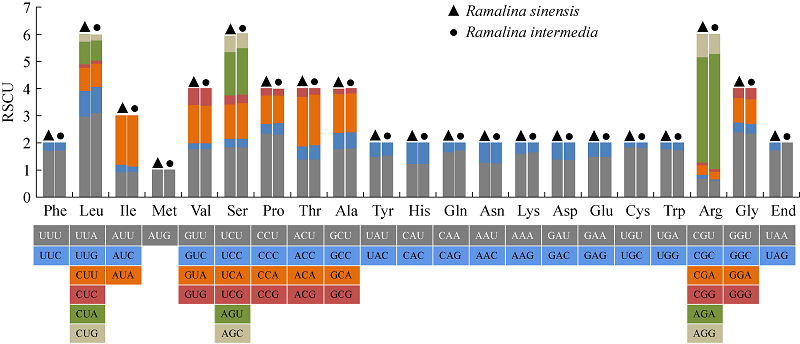
Ramalina sinensis is a widespread lichen in the Northern Hemisphere, and its metabolites have various biological activities such as antiviral, antimicrobial, antioxidant, antitumor, anti-inflammatory, and antidiabetic activities. Complete mitogenome of R. sinensiswe was sequenced, assembled, and annotated for the first time. The mitochondrial genome is of closed-loop structure with total length of 38 265 bp, encoding 42 genes including 15 protein-coding genes, 2 rRNA genes and 25 tRNA genes. R. sinensis mitochondrial genome had a significant AT preference. Twenty-four tRNAs were successfully predicted as typical cloverleaf structures. Relative synonymous codon usage analysis revealed a significant preference for A/U ending codons. Ramalinaceae collinearity analysis revealed no large gene rearrangements. Comparative analysis of the mitochondrial genomes showed a more intimate evolutionary relationship between R. sinensis and R. intermedia. Fifteen protein-coding genes had different Ka/Ks values, showing there were under different selection pressures. The phylogenetic analysis showed R. sinensis and R. intermedia has close relationship. This study provides basic data for future studies of phylogenetic evolution and genetic diversity of Ramalina.
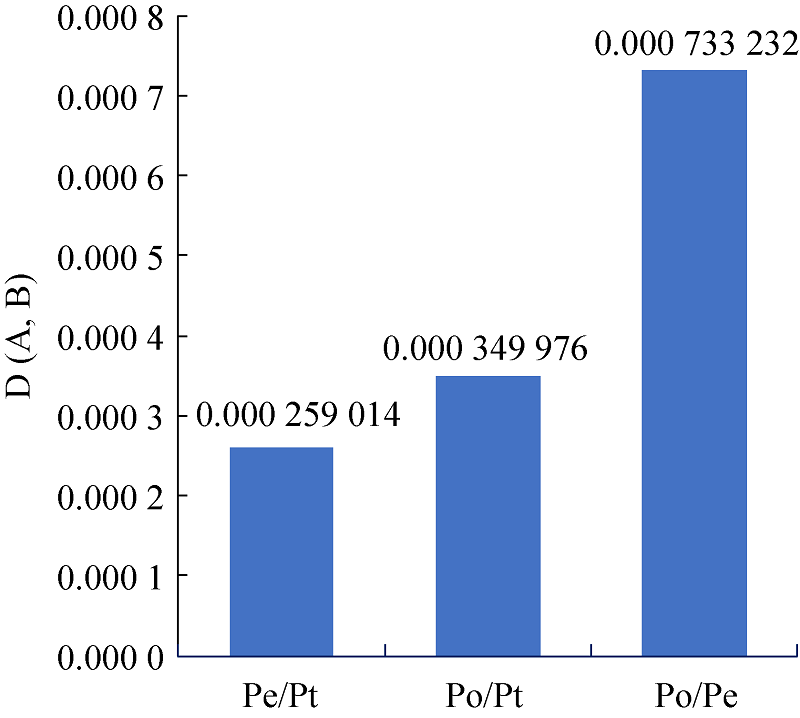
To understand the codon usage bias pattern and its influencing factors for the whole genome in three species of the genus Pleurotus, bioinformatic software tools were employed to systematically analyze the CDS sequences of the three species. The results showed that at the genome level, the differences in the total base composition were small, and the G/C content was higher. RSCU and RFSC analysis showed that Pleurotus ostreatus has the highest proportion of G/C (82.14%) ending preferred codons, and three of the preferred codons were unique. There were 25 identical preferred codons in the three Pleurotus species, 80% of which end with G/C; there were three common high-frequency codons, all of which end with G/C. Codon usage similarity analysis showed that the codon preference pattern in the three species was similar (similarity index<0.001), in particular, Pleurotus eryngii and Pleurotus tuoliensis had the highest similarity (similarity index=0.000 259 014); the codon usage frequency of the three Pleurotus species were close to that of Coprinopsis cinerea and Flammulina filiformis. PR2-Plot, ENc-GC3, and neutrality plot analysis indicated that the codon usage variation was mainly influenced by natural selection, and also by base mutation pressure and other factors to a certain extent. The results provide important data for analyzing the evolutionary rule of Pleurotus and developing the efficient heterologous expression receptor system.
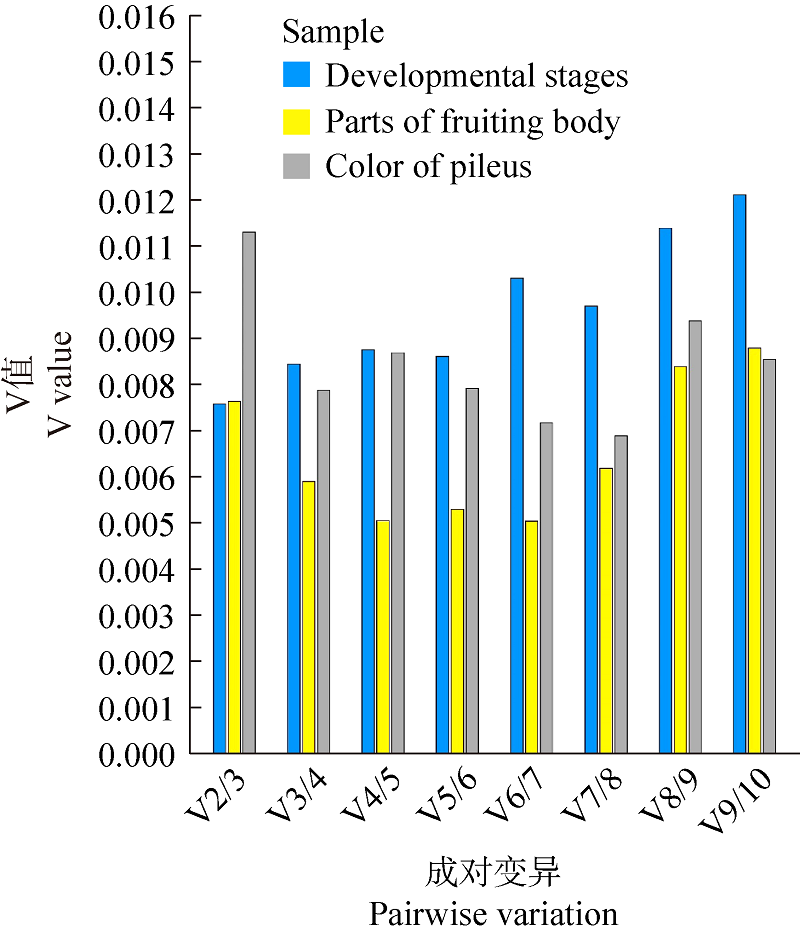
Vegetative mycelia, primordium, button and pilei (red, yellow and white), stipes and gills of young and mature fruiting bodies of Stropharia rugosoannulata were used as test materials. Ten reference genes (ACT, GAPDH, TEF, RPL4, PGI, PGM, RPB2, β-Tub, α-Tub, UBQ) were selected and primers across introns were designed. Quantitative real-time PCR (RT-qPCR) was used for amplification. GeNorm, NormFinder, BestKeeper and ΔCT algorithms were used for expression stability analysis, and ReFinder was used for weighted evaluation. Finally, reference genes suitable for various samples were screened. According to the final ranking of the stability of reference genes, UBQ and GAPDH were the most suitable combination of reference genes for different color pileus, while ACT, PGI and TEF were the least suitable. UBQ and RPB2 were the most suitable reference genes for different parts of fruiting bodies, while ACT, RPL4 and TEF were the least suitable. ACT and RPB2 were the most suitable combinations for reference genes for different developmental stages, while GAPDH, α-TUB and β-TUB were the least suitable.
Ectomycorrhizal fungi (ECMF) can widely form symbiosis with forest trees to promote the absorption of soil phosphorus. However, phosphate dissolving capacity of different fungal strains varied with different phosphorus sources, and the physiological factors affecting the dissolving capacity were still unclear. In this study, five fungal strains from Castanea mollissima and C. henryi forest were isolated, purified, and homology molecular identification was carried out on the basis of ITS sequencing. Together with Cenococcum geophilum (CG) obtained by the previous research, the strains were cultured on Montana medium containing insoluble organic phosphorus (calcium phytate C6H6Ca6O24P6, lecithin C42H80NO8P) and insoluble inorganic phosphorus (aluminum phosphate AlPO4, iron phosphate FePO4). The colony diameter, dry mass of mycelium, phosphorus dissolving rate, acid phosphatase activity, pH value, citric acid and oxalic acid content of six ECMF strains were determined to analyze the growth and phosphorus dissolving characteristics of each strain under different insoluble phosphorus sources. Pearson correlation analysis was used to explore the main physiological factors affecting the phosphorus dissolving rate under different insoluble phosphorus sources. Results showed that the growth rates of six ECMF strains were significantly different on the medium with different insoluble phosphorus (P<0.05). Scleroderma citrinum LY-20-2 grew fastest on the medium with AlPO4. On the media with other three insoluble phosphorus, Pisolithus orientalis LY-8 grew fastest. The capacities of six ECMF strains dissolving four kinds of insoluble phosphorus were significantly different (P<0.05). When C6H6Ca6O24P6 was used as phosphorus source, LY-8 had the highest phosphorus dissolving rate of 28.9%. When C42H80NO8P and FePO4 were used as phosphorus sources, the phosphorus dissolving rates of LY-20-2 were the highest, reaching 3.2% on the medium with C42H80NO8P and 4.6% on the medium with FePO4. When AlPO4 was used as phosphorus sources, the phosphorus dissolving rate of CG was the highest, reaching 3.2%. The pH values of the fermentation broth of each strain decreased when 4 insoluble phosphorus sources were added. All strains except Scleroderma sp. 2 (MB) did not secrete oxalic acid as C42H80NO8P and FePO4 were used as phosphorus sources. When C6H6Ca6O24P6 was used as phosphorus source, the colony diameter, dry mass of mycelium, acid phosphatase activity and oxalic acid content were significantly positively correlated with the phosphorus dissolving rate (r=0.61-0.88). When C42H80NO8P was used as phosphorus source, the colony diameter and acid phosphatase activity were significantly positively correlated with the phosphorus dissolving rate (r=0.50-0.95). When AlPO4 was used as phosphorus sources, there was a significant positive correlation between the dissolved phosphorus rate and citric acid (r=0.55). When FePO4 was used as phosphorus sources, there was no significant correlation between the dissolved phosphorus rate and citric acid content (r=0.44). There were highly significant negative correlation between phosphorus dissolving rates and pH values (r=−0.88-−0.70) under the existence of four insoluble phosphorus. It was found that compared to C42H80NO8P, AlPO4 and FePO4, C6H6Ca6O24P6 had a preference for ECMF strains from chestnut forest. ECMF adopt different strategies to dissolve different insoluble phosphorus sources, including regulating the growth rate and secreting different kinds of organic acids.

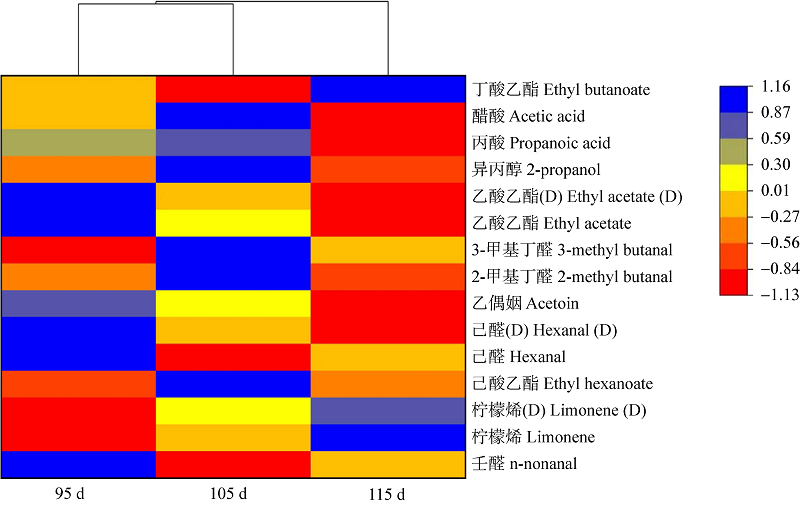
GC-IMS technology was used to detect volatile compounds at different spawn ages of two cultivated strains of Lentinula edodes, and the types and content of volatile compounds were preliminarily determined by using fingerprint information base and stoichiometry. Seventeen monomers and twelve dimers volatile compounds were identified, among which 3-methyl butanol, glutaraldehyde, heptanaldehyde, hexanal and limonene could be used as the characteristic volatile organic compounds to distinguish the different age stages of strain “Shenxiang 1513”, while ethyl butyrate and limonene could be used as the characteristic volatile organic compounds to distinguish the different age stages of strain “5550”. The content of limonene increased with the increase of spawn age, and the content of ethyl acetate and nonanal decreased with the increase of age. Based on principal component analysis and thermogram, the changes of volatile organic compounds at different spawn age were studied. It was found that there were great differences in volatile organic compounds at different ages, and there were also certain differences in volatile organic compounds in different cultivars. The volatile organic compounds in spawns aged 95 d and 105 d are relatively similar. The volatile organic compounds in spawn aged 95 d are relatively rich, but less in spawn aged 105 d. L. edodes could produce a variety of flavor characteristic substances in different growth periods. The types and content of volatile organic compounds can make a notable impact on the quality of L. edodes, and the results of this study seem advantageous for the quality breeding selection of L. edodes.
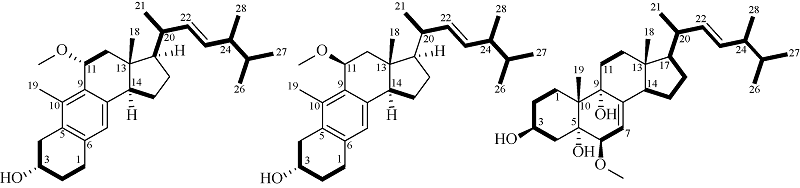
The chemical constituents and their biological activities of the fruiting bodies of Lanmaoa asiatica, a kind of “lurid boletes”, were studied. Seventeen compounds including nine steroids were isolated from the ethyl acetate extract of 95% ethanol extract of the fungus by various column chromatography techniques or recrystallization. The structures of the isolated compounds were identified as citreoanthrasteroid (1), 1(10→6)abeo-ergosta-5,7,9,22-tetraen- 11β-methoxy-3α-ol (2), 3β,5α,9α-trihydroxy-6β-methoxyergosta-7,22-dien (3), ergosterol peroxide (4), 9(11)-dehydroergosterol peroxide (5), 3β-hydroxy-(22E,24R)-ergosta-5,8(9),22- trien-7-one (6), (24S)-ergost-7-en-3β-ol (7), (22E,24R)-ergosta-7,22-dien-3β-ol (8), ergosterol (9), adenosine (10), 5’-deoxy-5’-methylamino-adenosine (11), 5’-deoxy-5’-methylamino-9-(α-L- lyxofuranosyl)adenine (12), (R)-4-methylpiperidin-2-one (13), uridine (14), uracil (15), nicotinamide (16) and 1(2)-linolyl-2(1)-palmityl-glycero-O-4’-(N,N,N-trimethyl)homoserine (17). Among them, the exact assignments of the NMR signals of 1-3 were reported for the first time, compound 13 was a new natural product, and compounds 1-17 were reported to be isolated from Lanmaoa asiatica for the first time. The cytotoxic activity of 1-17 was evaluated by MTT assay, and the results showed that 1, 3-6 and 9 displayed relatively strong cytotoxic activity against human breast cancer cells (MCF-7), mouse microglia cells (BV2) and human lung cancer cells (A549). Compound 10 displayed moderate cytotoxic activity against BV2 cells, with an IC50 of 48.34 μmol/L. The chemical constituents of Lanmaoa asiatica were comprehensively investigated, and this study will be meaningful in utilization of Lanmaoa asiatica.
The β-glucooligosaccharide fraction GLPW-A (DP2-14) from Ganoderma lingzhi was separated by Bio-Gel P-2 chromatography column. The eluting conditions including eluent, flow rate and collection volume per tube were optimized. The polymerization degree of isolated fractions were analyzed by matrix-assisted laser desorption ionization time of flight mass spectrometry (MALDI-TOF-MS), and the anti-inflammatory activity of these fractions were evaluated in vitro. Under the optimal separation conditions of 0.1 mol/L NH4HCO3 solution eluted at a flow rate of 0.1 mL/min and 2 mL collection volume per tube, eight fractions (F1-F8) were successively obtained. The polymerization degree analysis showed that F8 and F7 mainly comprised oligosaccharides with DP2 and DP3, respectively, and other isolated fractions (F6-F1) mainly contained components with 2-3 kinds of different polymerization degrees. In vitro anti-inflammatory activity showed that F5 and F6 mainly contained DP4-DP6 had no obvious anti-inflammatory activity in the concentration of 0.5-10 μg/mL, while the other fractions showed different level of anti-inflammatory activity at specific concentrations. The anti-inflammatory activity of β-glucooligosaccharide was related to the degree of polymerization of oligosaccharide fragments.

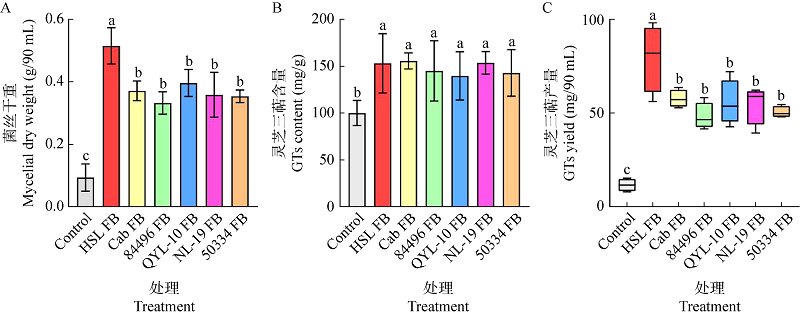
The industry of Ganoderma lingzhi is developing rapidly. The relative low content of ganoderma triterpenoids (GTs), the main bioactive component of G. lingzhi, however, poses a major challenge. Therefore, increasing GTs content by using a biotechnological approach holds great promises. In this work, various types of fungal elicitors from six strains of Clitopilus spp. were prepared to explore whether or how the elicitor treatments influence the mycelial biomass and GTs accumulation. Results showed that among these elicitors, the autoclaved fermentation broth of Clitopilus sp. HSL-YX-7-A (HSL FB), the dried mycelial powder of C. hobsonii NL-19 (NL-19 DMP), the fermentation broth extract of C. prunulus 84496 (84496 FBE) and the mycelium extract of Clitopilus sp. HSL-YX-7-A (HSL ME) significantly increased the mycelial biomass, GTs content and GTs yield compared with mycelial biomass, GTs content and GTs yield of the experimental control. The biomass increased by 450.09%, 64.64%, 46.97% and 66.14%, respectively; the GTs content increased by 53.01%, 25.58%, 25.17% and 20.47%, respectively; the GTs yield increased by 585.15%, 104.65%, 86.43% and 110.45%, respectively. Quantitative Real-time PCR showed that the expression levels of key enzyme genes hmgs, hmgr, mvd, fps, sqs and osc involved in the GTs biosynthesis were significantly up-regulated upon the treatments with HSL FB, NL-19 DMP and HSL ME. However, 84496 FBE treatment only resulted in up-regulation of the expressions of hmgs and sqs. There was a significant positive correlation between the average expression level of the six genes and GTs production increase rate (R2=0.972, P<0.05). This study demonstrated that the fungal elicitors from Clitopilus spp. displayed the potentials on efficiently increasing the mycelial biomass and GTs content of G. lingzhi. Clitopilus hobsonii NL-19 and Clitopilus sp. HSL-YX-7-A are endophytic and symbiotic in Quercus root, and they are hopeful to be developed as new beneficial microbiological products.
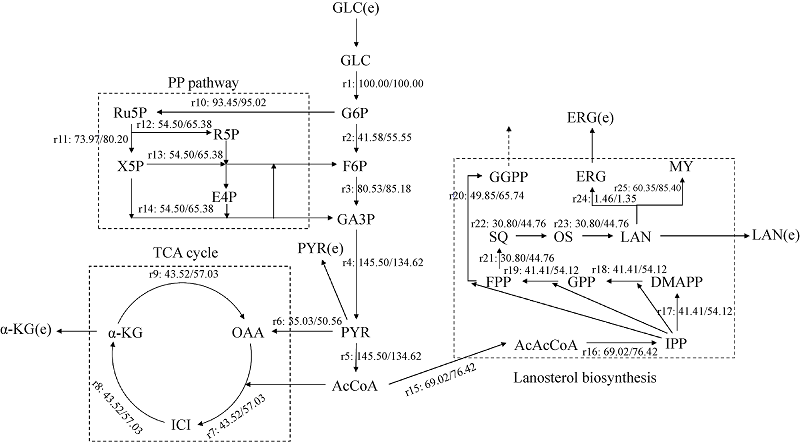
The effects of oleic acid on the metabolic flux distribution of lanosterol, the final products of liquid submerged fermentation of Ganoderma lingzhi, were studied by metabolic flux method in a 3 L stirred fermentor. The results showed that during the submerged fermentation of G. lingzhi, the metabolic flux of lanosterol increased by 45.29% by adding oleic acid to the liquid substrate. The content of by-product ergosterol decreased from 3.84 mg/g to 0.02 mg/g. The metabolic fluxes of lanosterol synthesis pathway (LP), tricarboxylic acid cycle (TCA), pentose phosphate pathway (PP) and glycolysis pathway (EMP) were increased by 29.09%, 14.52%, 12.22% and 2.11% as compared with those of the controls, respectively. Therefore, the addition of oleic acid could strengthen the overall metabolic flow distribution during submerged fermentation of G. lingzhi, reduce the accumulation of ergosterol, and improve the metabolic flow of lanosterol. This study laid a foundation for the improvement of triterpenoid yield in submerged fermentation of G. lingzhi.
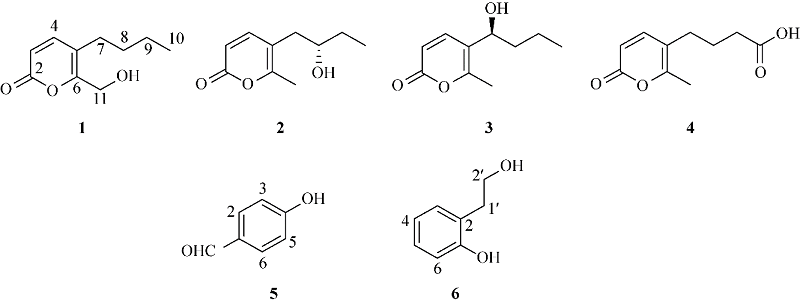
The bioactive secondary metabolites of Suaeda salsa endophyte Neocamarosporium sp. ZLM-26 was explored. Using the methods of thin layer chromatography, column chromatography of silica gel and high performance liquid chromatography, six compounds were isolated from the ethyl acetate extract of ZLM-26’s rice medium. Their structures were elucidated by spectral analysis and the literature data comparison, and they were identified as 5-butyl-6-(hydroxymethyl)-2H-pyran-2-one (1), (7S)-xylariolide E (2), (6S)-xylariolide D (3), diaporpyrone A (4), 4-hydroxybenzaldehyde (5) and 2-(2-hydroxyethyl) phenol (6). The antitumor and antimicrobial activities of these compounds were evaluated by CCK-8 and 96-well plate methods, respectively. Six compounds showed no antitumor activities on either HGC-27 or PANC-1 cell lines at the concentration of 50 μmol/L. Compound 4 showed relatively efficient anti-proliferation activities against Escherichia coli, while compound 5 and 6 had a moderate activity of inhibition of Pseudomonas aeruginosa. The NMR data and antibacterial activity of compound 1, a new natural product, were reported for the first time. Additionally, compounds 1-4 were isolated from Neocamarosporium for the first time.
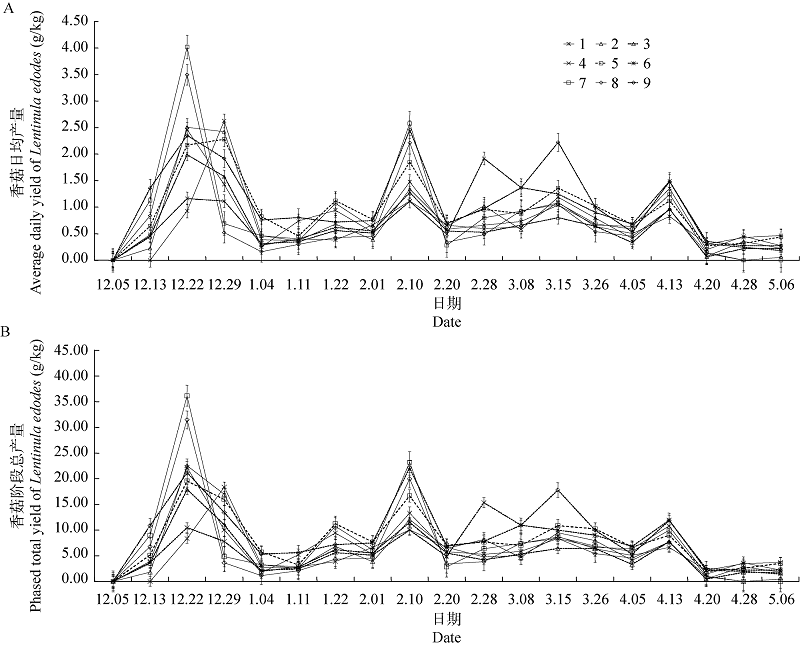
The yield and main nutritional components of Lentinula edodes cultivated by wood of different tree species of Fagaceae were clarified. The wood basic density, wood moisture content, and content of total nitrogen, total phosphorus, total potassium, organic carbon and total phenol of 9 main Fagaceae tree species in Dagang mountain area of Jiangxi Province were measured, and the fruting body yield and the content of protein, polysaccharide and fat mass fraction of L. edodes cultivated were analyzed. There were significant relationship between wood basic density, wood moisture content, total nitrogen, total potassium, organic carbon, C/N, and total phenol mass fraction of different experimental wood and total yield and protein mass fraction of L. edodes. The total yield of L. edodes cultivated with Lithocarpus litseifolius wood is the highest, 170.58 g/kg, and the protein content of L. edodes cultivated by Castanopsis sclerophylla wood is the richest, up to 2.65 mg/g. Average daily yield of L. edodes cultivated by different kinds of wood fluctuate with cultivation stages. The yield of L. edodes cultivated with the wood of Cyclobalanopsis gracilis and Lithocarpus litseifolius was the highest at the third fruting peak, while that of other tree species was the highest at the first fruting peak. The total yield of L. edodes was positively correlated with wood moisture content and total phenol content; the protein content of L. edodes was negatively correlated with the wood basic density. The protein content of L. edodes was negatively correlated with the total yield, and the polysaccharide content was positively correlated with the fat content. The wood of Castanopsis tibetana and Quercus fabri is suitable to be used as the high-yield cultivation substrate of L. edodes in commercialized production.
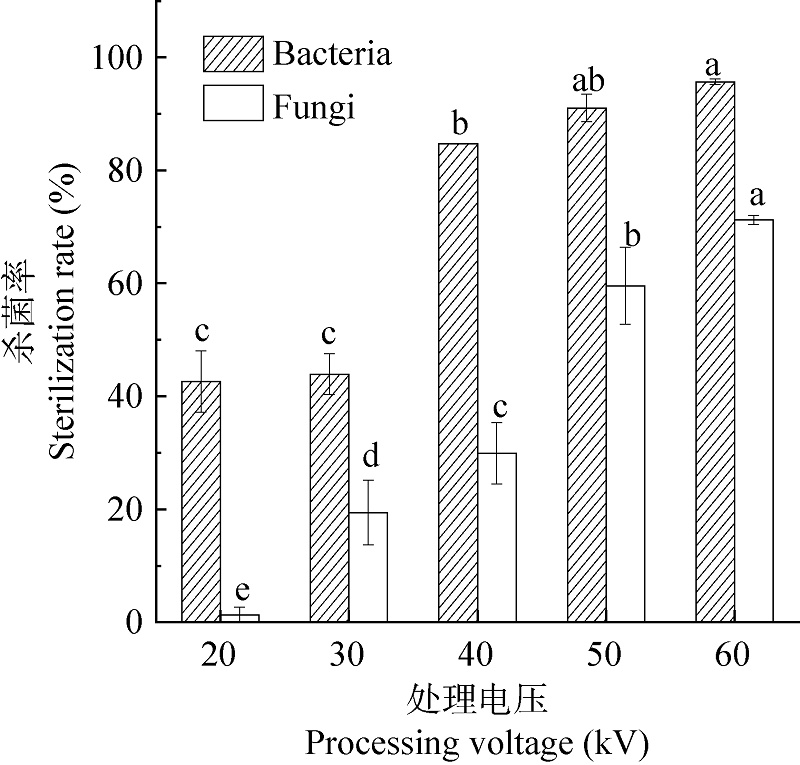
Morel culture substrate was sterilized by plasma technology at normal pressure and low temperature. The effects of four single factor variables, voltage, frequency, treatment time and treatment times, on colony number and water content were investigated, and the treatment conditions were optimized by orthogonal test. The results showed that the sterilization rate of bacteria and fungi increased with the increase of voltage, time and times of atmospheric plasma treatment, and the water loss also increased. With the increase of plasma treatment frequency, the sterilization rate first increased and then decreased, showing a tendency of “volcanic type”. There were significant differences in germicidal effect under different treatment conditions (P<0.05). The orthogonal test showed that the influencing degree of the four factors was ranged as frequency>voltage>treatment time>treatment times. The optimal sterilization condition was as follows: voltage 30 kV, frequency 9.6 kHz, time 45 min, once a treatment. Under this condition, the sterilization rates of bacteria and fungi were 96.87% and 93.77%, respectively, and the water loss was less.
Irpex lacteus strain 2-1-1 was isolated from wild fruiting body on cherry tree trunk in campus of Guizhou University and identified on the basis of morphological structure, ITS sequencing, and phylogenetic analysis. Its three lignin-degrading enzymes were identified as laccase (Lac), lignin peroxidase (LiP), and manganese peroxidase (MnP). Decolorization experiment on seven dyes in solid medium proved that I. lacteus 2-1-1 could decolorize all the seven dyes, and Congo red dye was most easily decolorized. According to gas chromatography-mass spectrometry (GC-MS), the main degradation products of Congo red dyes were benzidine, biphenyl, styrene, hexadecane, and 3-nitrophenol. Single factor and comprehensive optimization of decolorization conditions are that under Congo red dye concentration of 50 mg/L, the best carbon source is fructose, metal ion is Zn2+, and pH is 7. Under these conditions, the decolorization rate of Congo red was 91.03%, and increased by 17.13% as compared with the experimental control. The toxicity test of Congo red dye before and after decolorization by I. lacteus indicated that after clear water treatment, the toxicity of Congo red dye was obviously reduced.