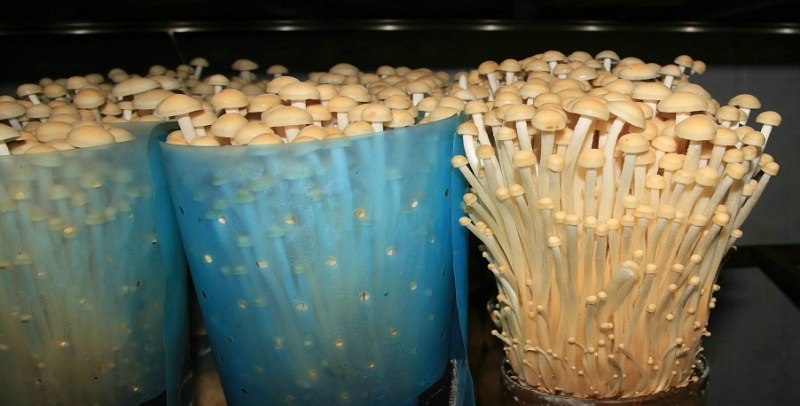
In recent years, with advances in biotechnology and modern industrial technology, the industry of edible and medicinal fungi has been developed rapidly in China. Edible and medicinal fungi have been utilized more and more extensively and their varietal structure has been greatly improved. This review summarizes the latest research progress of edible and medicinal mushrooms domesticated and cultivated in China during the last ten years. A checklist of 33 edible and medicinal mushrooms that have been successfully domesticated and cultivated in China in recent ten years was sorted out, and the biological characteristics and cultivation conditions of these mushrooms, including the optimal growth temperature, pH, carbon source, nitrogen source, and substrate, etc., are summarily introduced.
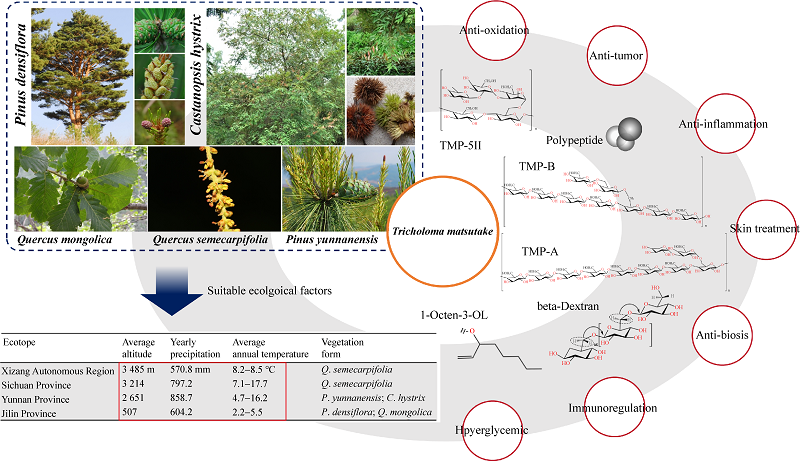
Tricholoma matsutake is a rare edible and medicinal fungus in the world. Its active components (such as Tricholoma matsutake polysaccharide, polypeptide, Tricholoma matsutake alcohol, terpenes, and steroids) have been confirmed to have good effects on antioxidation, antitumor, immune regulation, antibacterial activity, skin care, and have great potential in the development of dietary nutritional supplements, cosmetics, and drugs. However, the current consumption pattern of T. matsutake in China is still mainly fresh food and primarily processed products, being at a standstill of low degree of finishing. In this paper, the active components of T. matsutake and their research progress were reviewed, and the suggestions for their commercial application were put forward, aiming at providing a theoretical reference for the deep processing and utilization of T. matsutake in China and a scientific basis for promoting the development of rural economy.
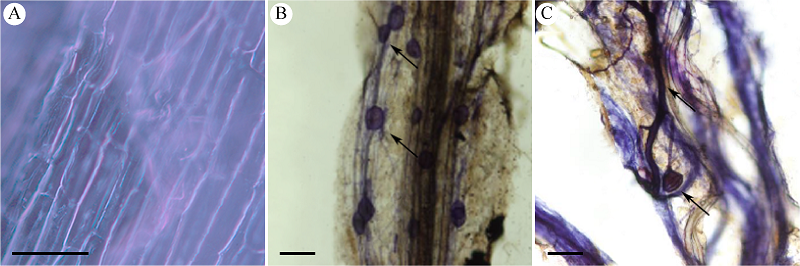
Pinus tabuliformis and Pinus sylvestris var. mongolica are important afforestation species with different geographical distributions in China. The West Mountain of Beijing is the suitable area for the growth of Pinus tabuliformis, but is the southern extremity of distribution of P. sylvestris var. mongolica, therefore it is an ideal research site to explore the driving role of tree species in the construction of microbial community in soil-plant continuum. In this study, high-throughput sequencing technology was used to obtain the composition of microbial communities in several parts of the soil-plant continuum of plantations of P. tabuliformis and P. sylvestris var. mongolica in West Mountain of Beijing. The role of species factors in the construction of soil-plant continuum microbial community of these two pine trees was explored, and the physicochemical properties of soil closely related to soil microorganisms were further studied. The results showed that the difference of alpha diversity of microbial community in soil-plant continuum between the two pine was mainly reflected in bulk soil and rhizosphere soil. The beta diversity analysis showed that the bacterial community composition in needle was not significant difference between the two pine, while the microbial community composition in other parts of tree was different between the two pine. Tree species had the highest explanation for the variance of soil and rhizosphere microbial community composition, while the lowest explanation for the variance of needle microbial community composition, in other words, tree species played a larger role in the construction of soil and rhizosphere microbial community, but a smaller role in the construction of needle endophytic microbial community. The network structure of bacterial communities in the same part of tree was more complex in P. tabuliformis than in P. sylvestris var. mongolica, but the fungal network had less differences between the two pines. Abundant microbial groups in the tissues and soil of P. tabuliformis and P. sylvestris var. mongolica were found. At class level, the relative abundance greater than 5% was considered as dominant class. Seven bacterial classes, Alphaproteobacteria, Betaproteobacteria, Actinobacteria, Thermoleophilia, Gammaproteobacteria, Bacilli, and Clostridia, and seven fungal classes, Agaricomycetes, Leotiomycetes, Sordariomycetes, Eurotiomycetes, Dothideomycetes, Mortierellomycetes, and Pezizomycetes, were recognized. Significant differences in soil physicochemical properties, e.g. available phosphorus (AP), pH and available kalium (AK), were found between the plantations of P. tabuliformis and P. sylvestris var. mongolica, and these properties effect soil microbial diversity and composition between the two pines. In addition, alkali-hydrolyzed nitrogen (AHN) was also significantly correlated with the composition of the bacterial community. The results demonstrate the interactions between pines and microorganisms and the mechanism of microbial community construction, and provide reference data on microbial community in pine plantations in northern China.

The ectomycorrhizal fungus Albatrellopsis flettioides associated with Pinus yunnanensis has high nutritional and ecological value, and its shiroes soil microorganisms have an important impact on fruiting body development. The community composition of microbiota in the shiroes soil and non-shiroes soils of A. flettioides was analyzed to explore the main microbial groups that affect fruiting bodies production of the fungus. The results showed that there were differences in the fungal and bacterial alpha diversity indices between the shiroes soil and non-shiroes soils (EG>CG). The dominant taxa in the shiroes soil are Agaricomycetes, Geminibasidiomycetes, Eurotiomycetes, Alphaproteobacteria, and Actinobacteria. Correlation analysis revealed a strong correlation Suillus and Albatrellus and the shiroes soil samples of A. flettioides, while Amanita, Amphinema, and Russula were highly correlated with non-shiroes samples. Based on differential group analysis, 35 fungal and 28 bacterial indicator groups at different taxonomic levels were recognized.

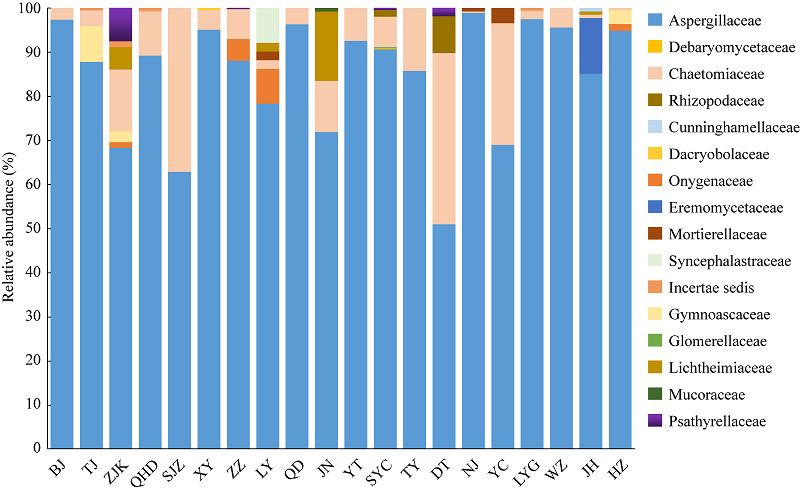
Soil samples from 20 Chinese zoos were selected as materials to analyze the community composition and ability of degrading keratin of heat-tolerant fungi of zoo soil. Under the temperature of 40 °C, the target fungi were cultured by dilution plate method and identified on the basis of combining morphology and phylogeny. The keratin-degrading abilities of the fungi were explored on skim milk powder medium and chicken feather fermentation medium. In total, 3 399 strains of heat-tolerant fungi were isolated and identified from the zoo soil, belonging to 8 classes, 9 orders, 15 families, 39 genera and 60 species. At the family level, Aspergillaceae was dominant in the 20 zoo soil samples, and Aspergillaceae and Chaetomiaceae were in common. At the genus level, Aspergillus was dominant. At the species level, A. niger was dominant. In addition, 35 heat-tolerant keratin-degrading strains were obtained, belonging to 6 genera and 10 species, including 15 strains of 3 Acrophialophora species and 11 strains of 3 Aspergillus species. Acrophialophora levis QHDZ1-2 has the highest degradation rate reaching 52.90%. Acrophialophora and Thermothelomyces were first found to have keratin-degrading abilities. Further exploration of utilization of the keratin-degrading strains is profitable.
There are a large number of dominant nucleus monokaryons and a few recessive nucleus monokaryons in the process of protoplast monokaryotization of Hypsizygus marmoreus. In order to study the effect of these different types of nuclei on the genetic transformation efficiency of arthroconidia, ten strains of dominant and recessive nuclear monokaryons isolated previously from protoplast monokaryotization were hybridized in pairs respectively. The test strain Q group consisted of five recombinant heterokaryons crossed by the strains with dominant nuclei, the test strain R group consisted of five recombinant heterokaryons crossed by the strains with recessive nuclei were obtained. The arthroconidia of these new recombinant heterokaryons were used to carry out the genetic transformation experiment. The experimental statistical results showed that the transformation efficiency of five recombinant heteronuclear strains Q1A, Q1B, Q2A, Q3A and Q3B in group Q were 81%, 59%, 57%, 56% and 53%, respectively. The transformation efficiency of R1A, R2A, R2B, R3B and R4B in group R were 45%, 45%, 44%, 46% and 41%, respectively. The transformation efficiency of the five dominant recombinant heterokaryons was higher than that of the five recessive recombinant heterokaryons. The average transformation efficiency of group Q was 61%, and significantly higher than that of group R (44%). The mechanism of the significant difference in genetic transformation efficiency between monokaryons needs further research.

The mycelium of Polyporus umbellatus can infect and digest the rhizomorph of Armillaria sp. to obtain nutrients during establishing symbiotic relationship between P. umbellatus and Armillaria sp. and glycoside hydrolase is one of the main enzymes involved in this process. In this study, 309 glycoside hydrolase family genes of 42 classes were obtained from the transcription database of P. umbellatus sclerotia. They encoded 344 domains, where the glyco_hydro was the major type with a total of 173 in 35 subclasses. The gene ontology (GO) annotation results showed that these proteins mainly involved in the metabolism and decomposition of substances, especially the metabolism of polysaccharides and other macromolecular substances in biological processes. In molecular function subcategories of GO, 181 genes displayed hydrolase activities, showing diversity functions. Compared with the sclerotia un-infected by Armillaria sp., there were 43 differentially expressed genes (DEGs) in infected sclerotia. Function domains like glyco_hydro_48, cellulase and polysacc_deac_1 were encoded by DEGs encoding polysaccase glyco_hydrochitin, cellulase and polysacc_deac_1 etc. All these data provide the candidate genes and proteins for the further study of interactions between P. umbellatus and Armillaria sp.

Two compatible monokaryons (Y0040-1 and Y0040-3) isolated from dikaryotic Lentinula edodes were used for evaluating growth rate and gene expression differences. The results showed that the mycelial growth rate of the two monokaryons was different on different mediums (PDA and PDA+2% sawdust), and the growth rate of Y0040-1 was higher than that of Y0040-3. Further analysis of transcriptome indicated that a total of 1 633 genes detected had common differentially expressed genes, which might be the shared expression pathways leading to the difference between the two monokaryons. Among these genes, 155 genes were up-regulated and 136 down-regulated. Annotation and analysis of these genes showed that the co-up-regulated genes were involved in metabolic activities, of which amino acid metabolism and carbohydrate metabolism were the most enriched. Lignocellulase analysis showed that the number of up-regulated genes in Y0040-1 was higher than that in Y0040-3, and the expression levels of cellulose and lignin degrading enzymes in Y0040-1 strain were higher than those in Y0040-3.

In order to obtain a suitable liquid fermentation medium for cultivation of wild Auricularia sinodelicata, a certain amount of plant carbon and nitrogen source leachate was added to the conventional liquid PDA medium, and the additional quantities of the leachate were optimized by orthogonal tests. It was showed that the highest mycelial ball biomass dry weight [(1.158 0±0.156 6) g/100 mL] was obtained in the culture incubated for 6 d under the addition of wheat grain 5 g/L and wheat bran 10 g/L. The mycelium balls showed high density and uniform size, and the mass dry weight was 94.69% higher than that of CK [(0.594 8±0.054 7) g/100 mL]. The degree and change of laccase activities under different medium formulation within 9 d incubation were significantly different as compared with those of CK. The plant carbon and nitrogen source additive had a certain induction effect on the production of laccase, and the laccase activities under different induction media showed a trend of decrease to a certain extent with the increase of incubation time, except for medium with additional corn flour and CK, in which the laccase activities increase first and then decrease. This study provides reference for the production of artificially cultivated liquid strains of A. sinodelicata.

In this study, Beauveria bassiana (BB) and Glomus mosseae (GM) as compound inoculants (MIX) were inoculated into tobacco. Four different treatments including CK, inoculation of sole BB, inoculation of sole GM and inoculation of MIX were set up. The agronomic characters, chlorophyll SPAD, dry matter accumulation and petroleum ether extract (PEE) content of tobacco in the whole growth cycle were determined. The results showed that the MIX treatment could significantly improve the agronomic characteristics and promote the growth of the root system at seedling stage, and the dry matter accumulation of the seedling was also significantly improved. After transplantation, the maximum leaf area, leaf number, stem circumference, and plant height of the tobacco plants treated with MIX were significantly increased as compared with those treated with other treatments. The chlorophyll content of plants was significantly increased, and the dry matter accumulation increased by 1.24-1.32 times. In 60 days after transplantation, the chlorophyll content of MIX-treated plants significantly decreased by 20.1%, and the PEE content was significantly increased by 5.70% and 6.68% in B2F and B3F grade of tobacco upper mature leaves, respectively. The results come to the conclusion that the combination of B. bassiana and G. mosseae has a synergistic effect in different growth stages of tobacco, significantly improving the root development of tobacco, increasing the plant growth potential and the content of PEE in upper leaves.
Leucocalocybe mongolica is a rare and endangered species under national key protection, with significant economic and ecological values. There is no research on the impact of climate change on the distribution pattern of L. mongolica previously, however. Based on the distribution data in the literature, adaptive distribution areas under current and future conditions and the climate factors affecting the distribution pattern of L. mongolica are studied using maximum entropy model. The area under curve (AUC) values of training set and test set of the prediction model for the suitable habitat of L. mongolica were 0.997 and 0.998, respectively. The prediction results of the model are extremely accurate. The precipitation in the warmest quarter, and coldest quarter, temperature seasonality, and precipitation seasonality are the main climatic factors affecting the distribution of L. mongolica, with the cumulative contribution rate of 75.2%. Globally and currently, the most suitable and highly suitable areas for L. mongolica are mainly concentrated in Mongolian plateau consisting of northern China, northern and central Mongolia, and the border areas among Russia, China and Mongolia. In China, it is mainly distributed in Inner Mongolia, Heilongjiang, and Xinjiang. Inner Mongolia is the core area for the distribution of L. mongolica, which could be divided into two subareas: Hulunbeir grassland in the north and Xilingol grassland in the south. Under four future (2030s, 2050s, 2070s) climate change scenarios, the most suitable and high suitable areas of L. mongolica will shift to higher latitudes, forming the pattern of decline in China and increase in Mongolia. The distribution characteristics model of the suitable habitat of L. mongolica based on the references, field survey data, selected environmental variables, and coming future climate change scenarios, shows high reliability, providing a theoretical basis for the protection of wild resources of L. mongolica.

‘Zhejin 102’ is a pale yellow cultivar of Flammulina filiformis screened through multi-spore self-fertilization and systematic breeding and appropriate to factory cultivation. It is characteristic of clustered basidiomata with round caps, smooth and straight stipes, and few villi at base. The average yield reaches 394 g/bottle and the cultivation period is 61-66 d. ‘L901’ is a new cultivar of Lentinula edodes screened through multi-spore self-fertilization and systematic breeding and appropriate to factory and facilities cultivation. It is characteristic of round, solid and brown caps, obvious surface scales, thin and short stipes, small ratio of stipe to cap, good taste and high proportion of high-quality products. The average yield of the first three harvests of basidiomata is 941.7 g/cultivated rod and the cultivation period is 160 d. ‘Zhelinhou No. 2’ is a new cultivar of Hericium erinaceus screened through chemical mutation breeding of parent ‘Changshan Houtou No. 99’ and appropriate to facilities cultivation. It is characteristic of fleshy basidiomata with no branches, head-shape or obovate-shape, no stem, droopy spur, and high content of polysaccharides and crude fibers. The average yield reaches 562 g/bag and it is appropriate to be cultivated under natural climate conditions in Zhejiang Province.